WORK · 06
INFINITH: From a Strategy SaaS Launch to AI Search Optimization and a Signed Clinic MOU
- Client
- INFINITH (AIO2O) · View Plastic Surgery
- Role
- Product strategy, service planning, solo build (directing AI coding agents), business development, PR
- Period
- 2025 ~ 2026
- Website
- infinith.webforai.kr ↗
- MOU coverage (106 placements incl. full-text runs)
- 34 outlets
- first client, MOU signed 2026.10.06
- 1 → MOU
- questions measured in AI answers (60 EN · 120 KO)
- 180
- product repository commits · solo build
- 305/306
Challenge
Premium medical clinics run many channels with one or two marketers. Building a strategy on data is hard, and patients increasingly ask AI about clinics instead of a search box. I found an open market in high-ticket, high-involvement clinic marketing, and the product had to reach it without a dedicated engineering team and be proven by a real clinic adopting it.
Approach
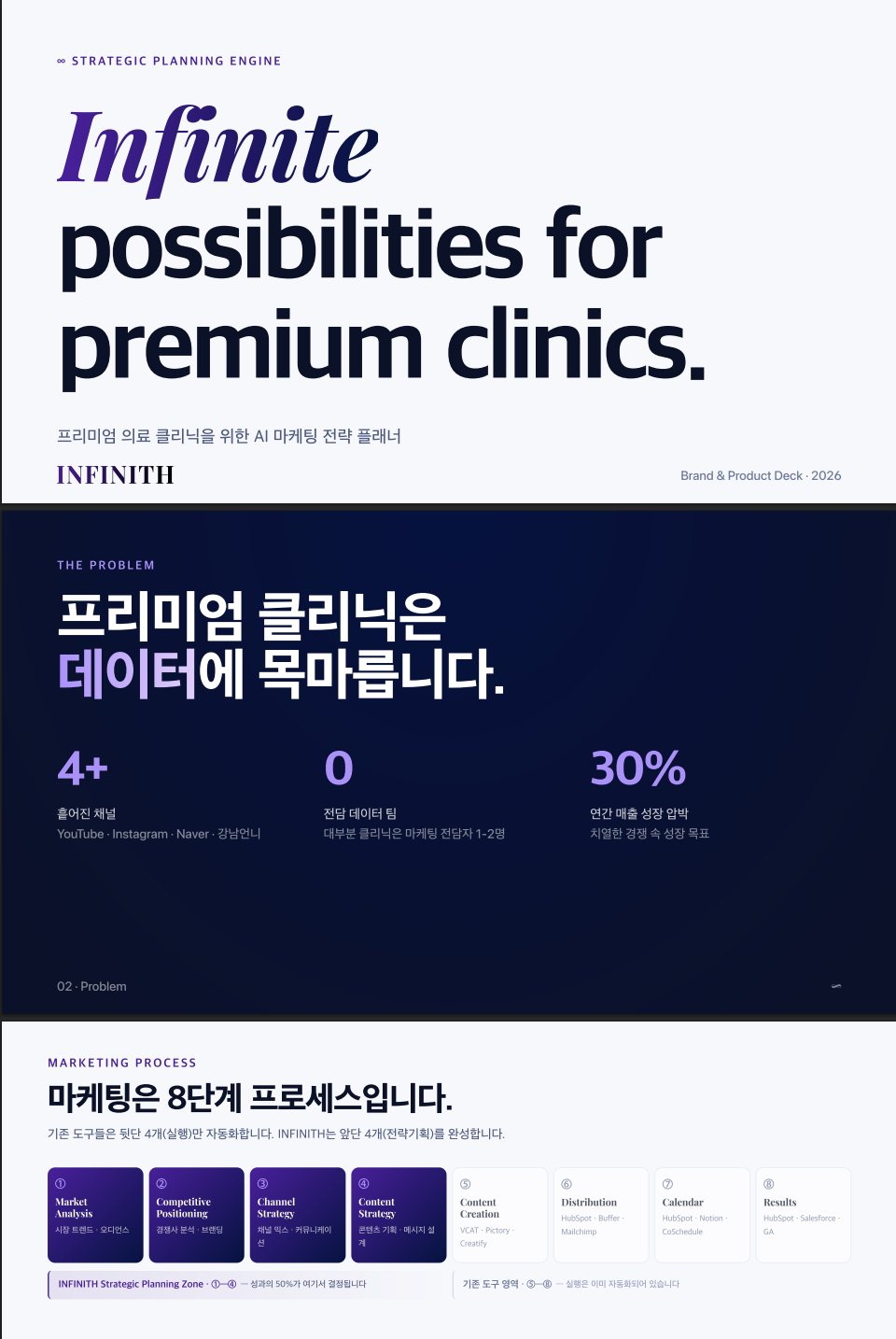
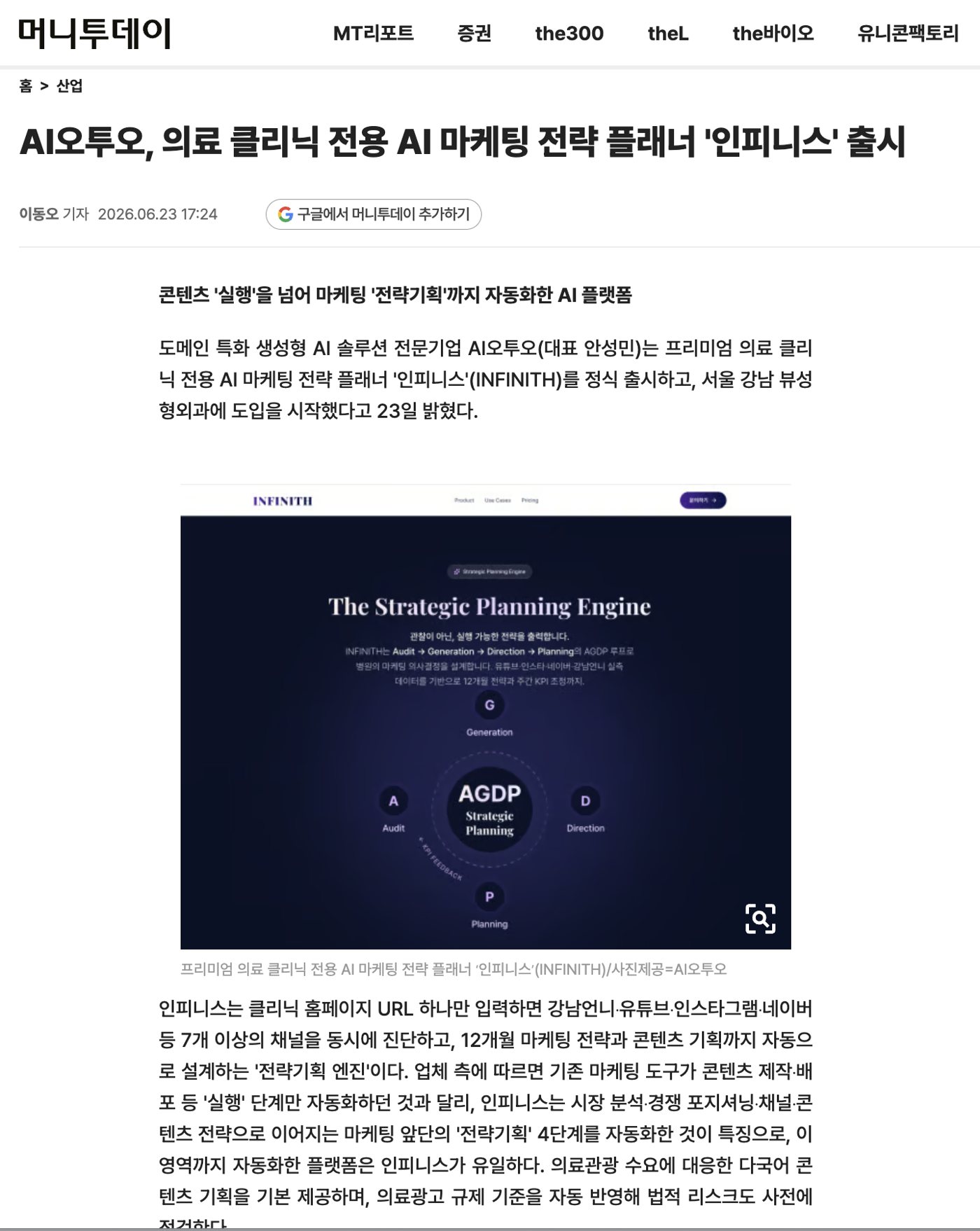
1. Launching INFINITH V01 (2026.03 ~ 06). I planned and built a strategy-planning engine that diagnoses a clinic’s channels from one URL and designs a 12-month marketing strategy. I designed the AGDP cycle (audit, generation, direction, planning) and pricing tiers by clinic size, then built a sales prototype on View Plastic Surgery’s real data to win the first clinic. I planned and distributed the launch press release, which ran in Money Today, Nate News, and Newswire.
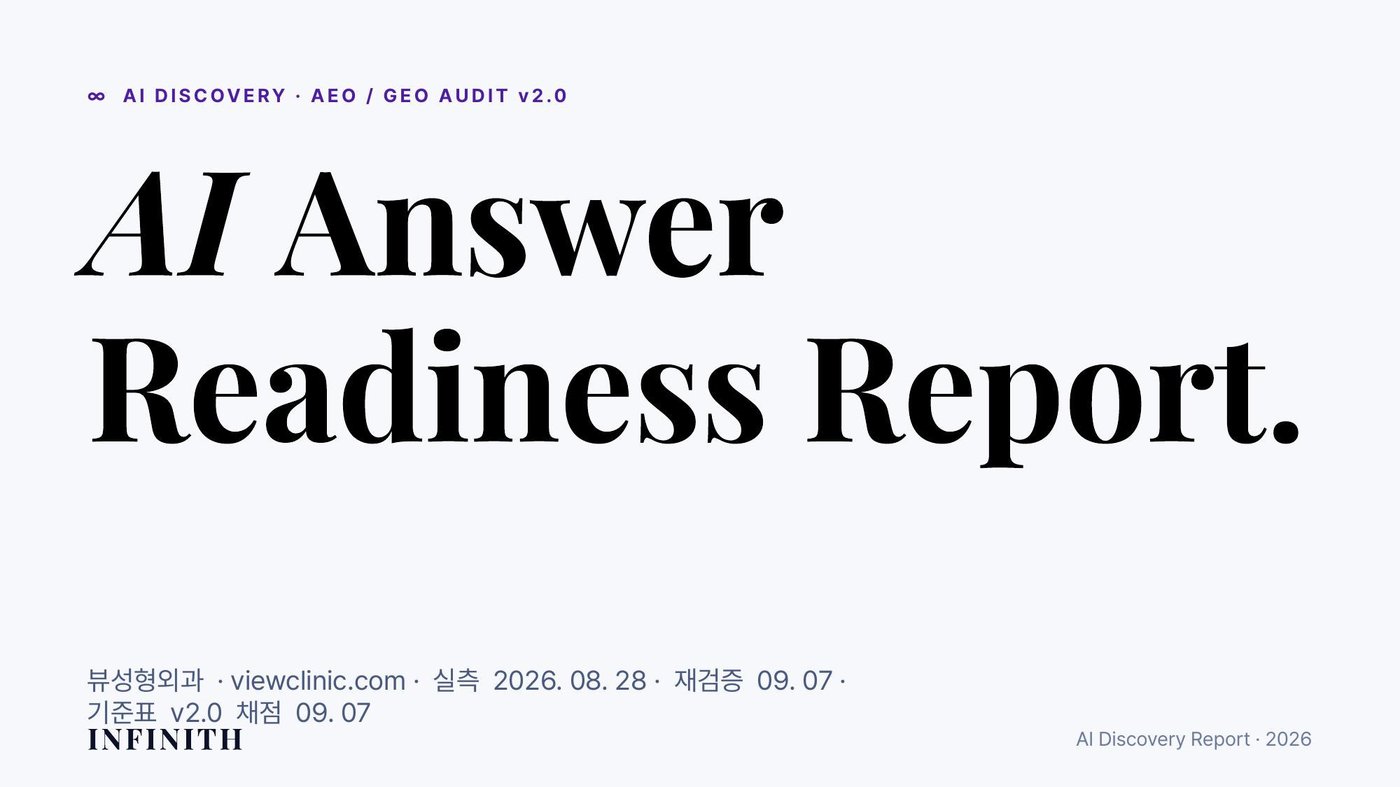
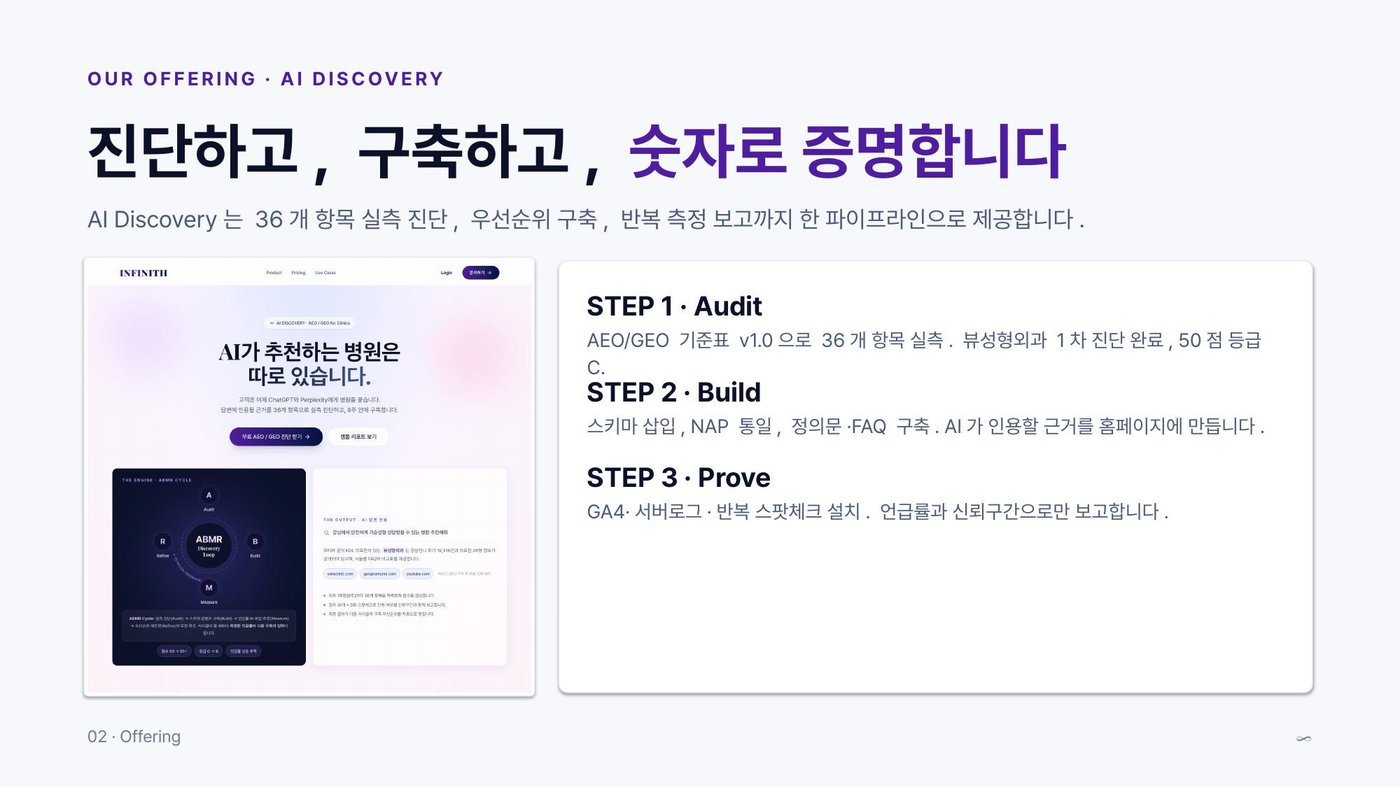
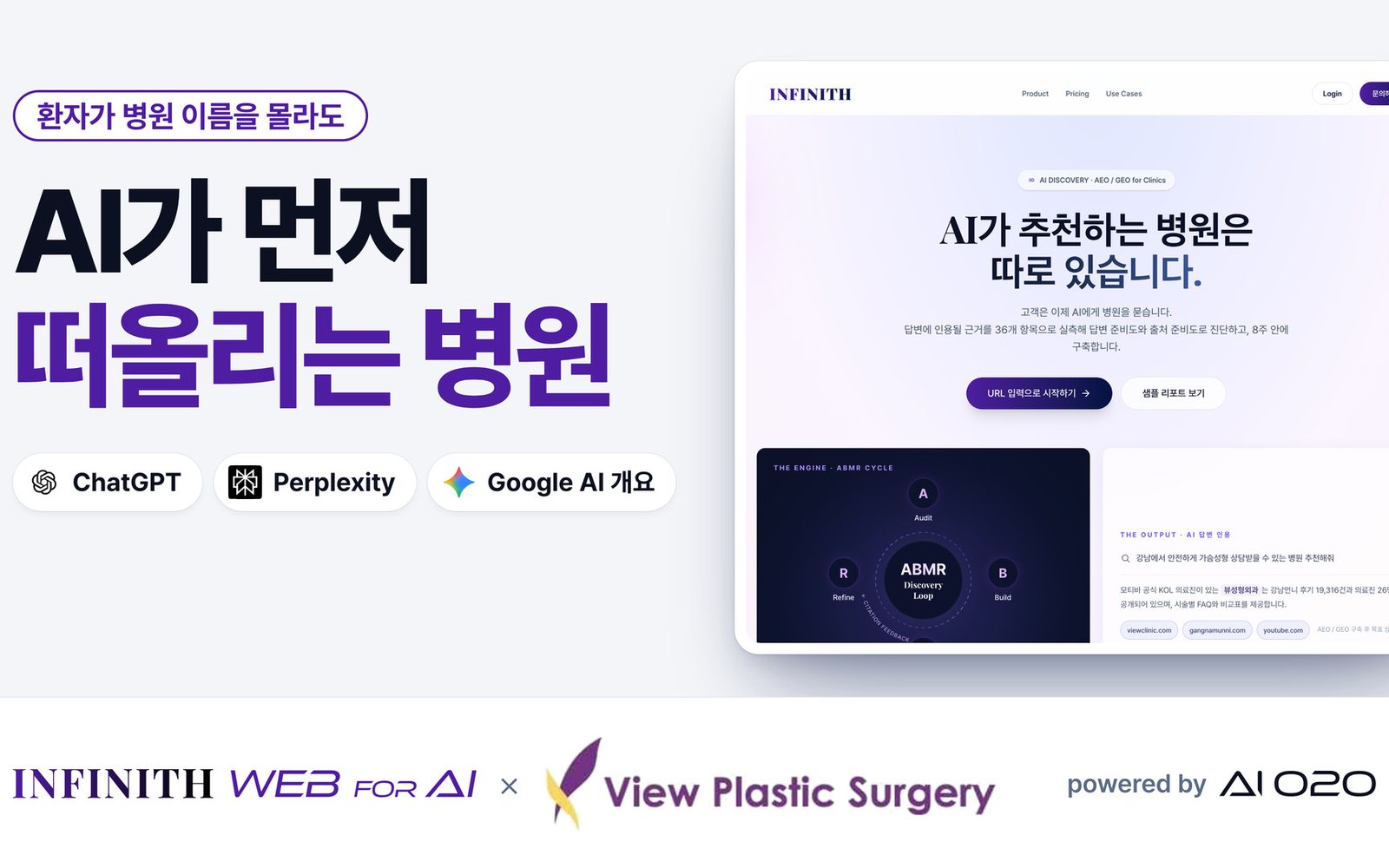
2. An extension grounded in measurement (2026.08 ~ 09). Measured AI crawler access led me to add AI search optimization (AEO and GEO) diagnostics. I designed a 36-criteria rubric and a question bank, and measured 120 Korean questions on ChatGPT and Perplexity and 60 English questions on ChatGPT, Perplexity, and Google AI Overviews. Diagnostic reports, the POC proposal, and the competitor comparison all use one standard format and one set of criteria. Competing clinics are anonymized with Korean medical advertising law in mind.
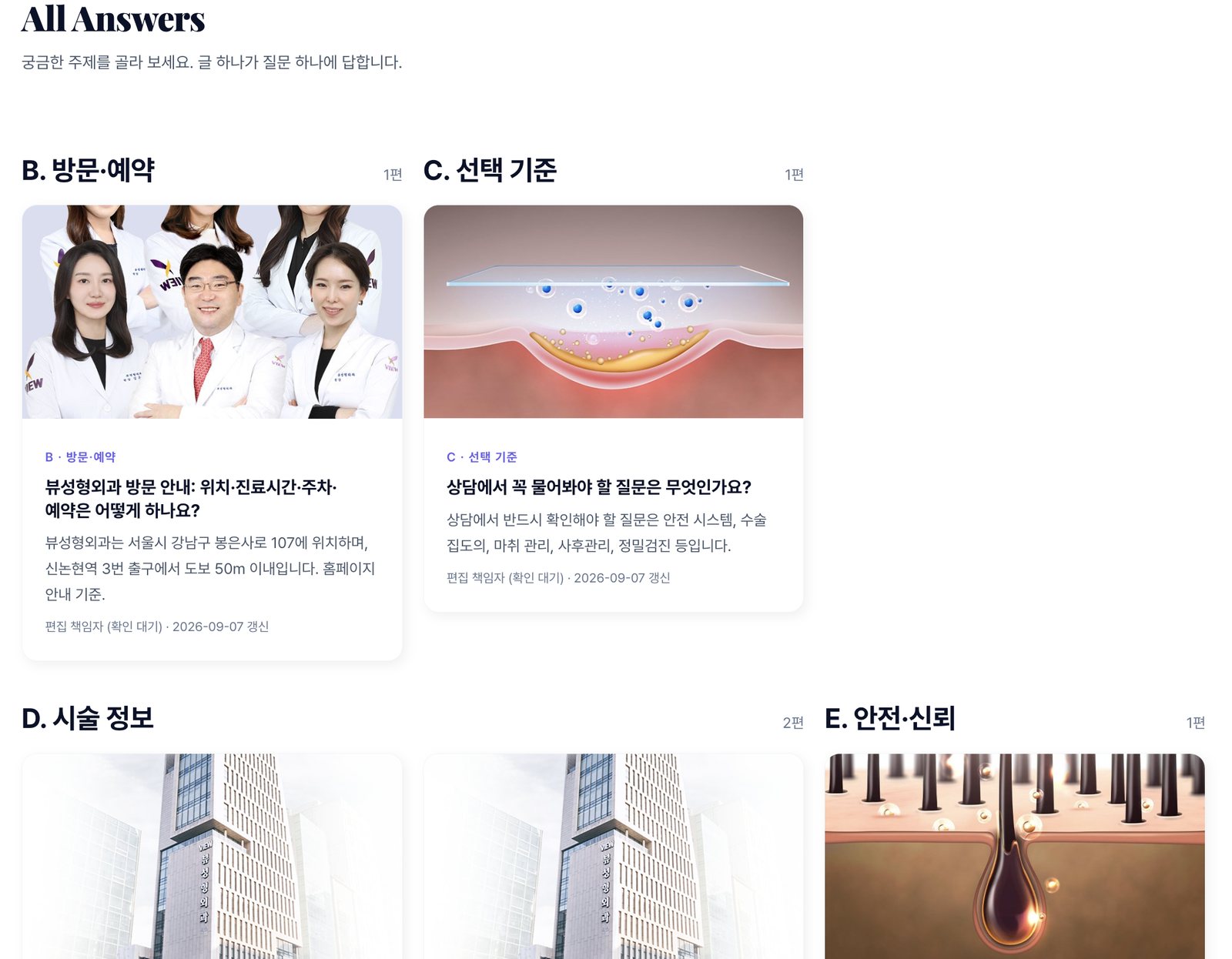
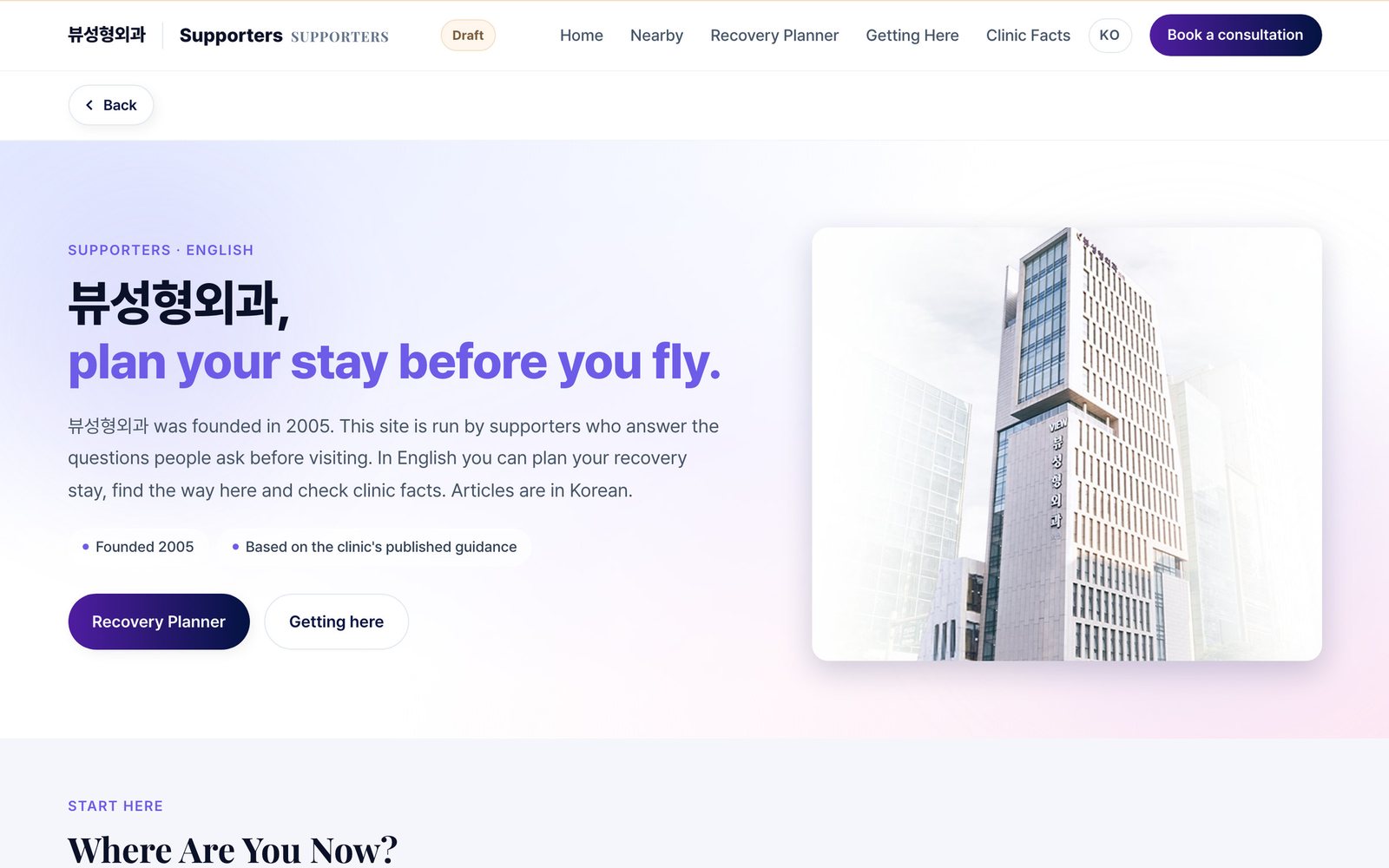
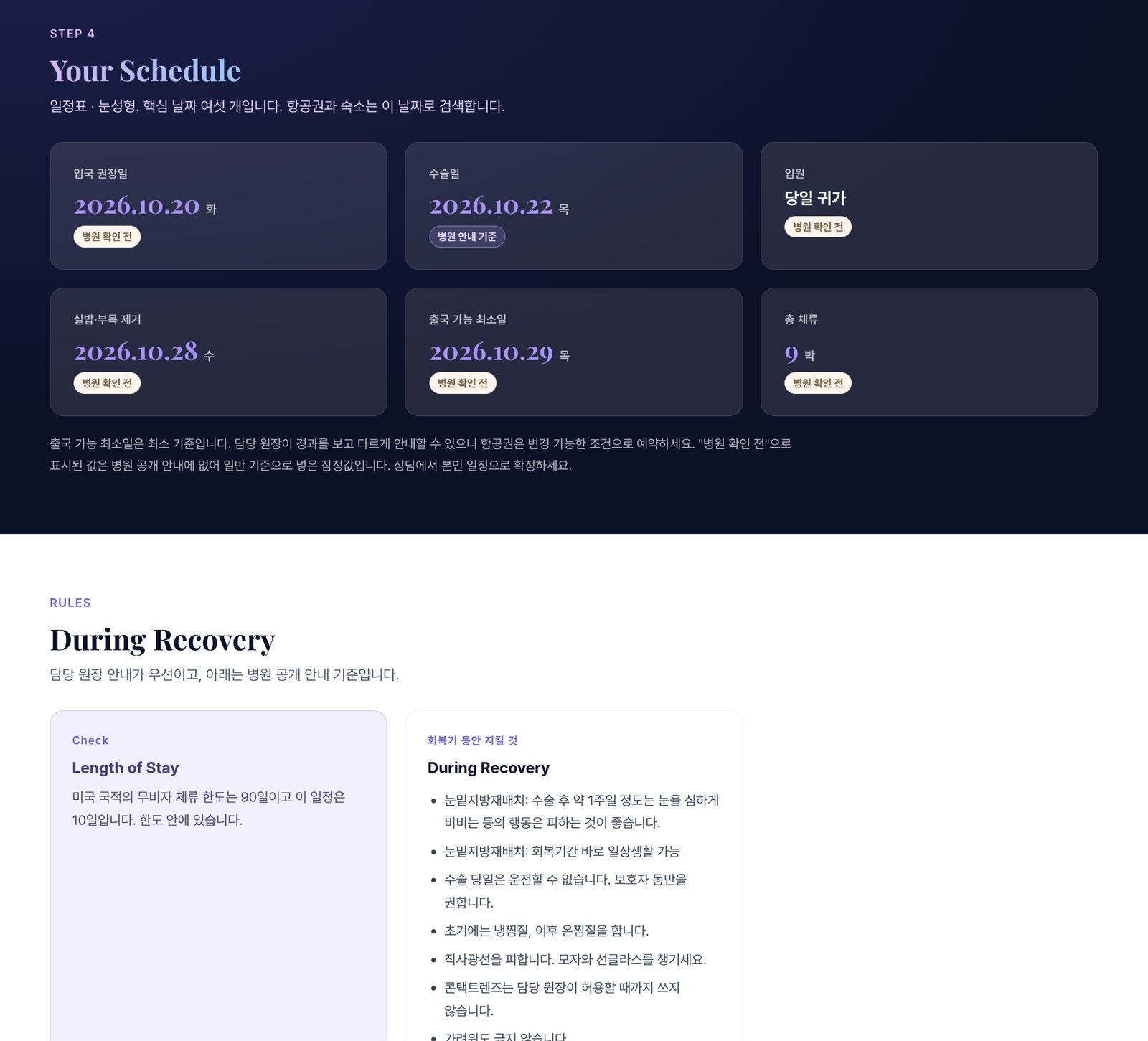
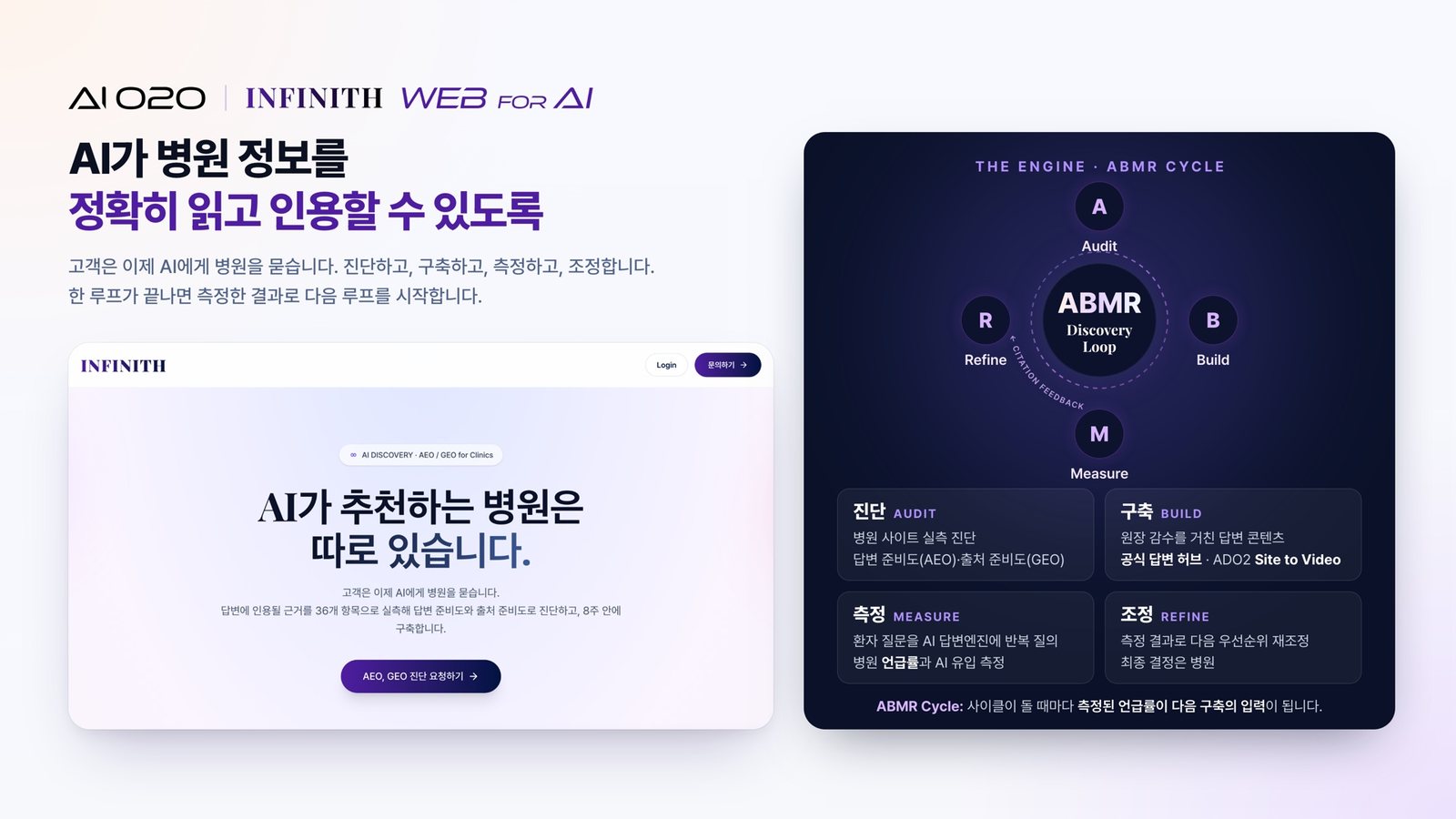
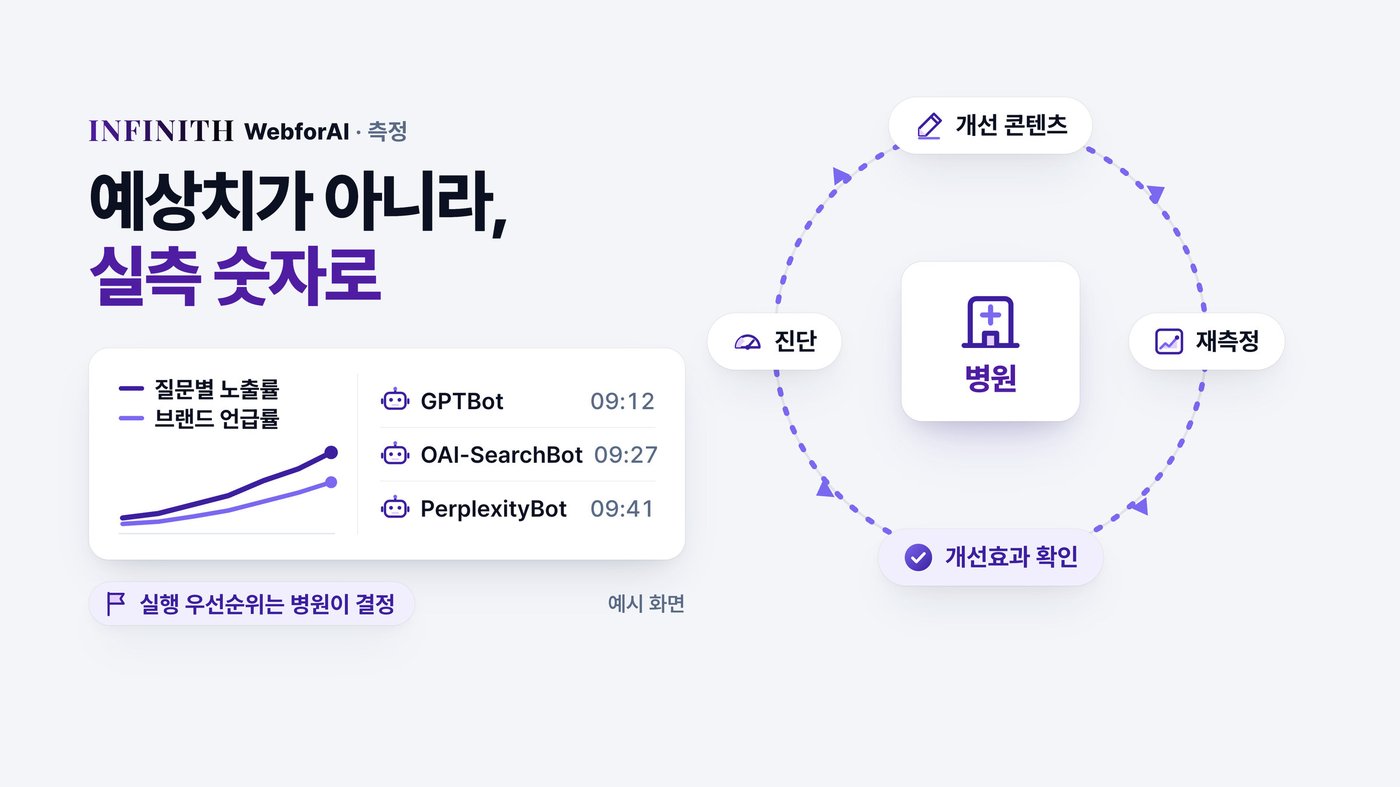
3. INFINITH WebforAI (2026.09). I packaged the loop of audit, build, measure, and refine as a product at infinith.webforai.kr, with one subdomain per clinic under a shared domain. The first case is the English Official Answer Hub for View Plastic Surgery: English pages that answer the questions international patients ask, a recovery planner built around the surgery date, and a guide to the area around the clinic. The clinic’s existing website stays as it is; the official information lives in the hub. The hub’s information architecture and publishing rules are documented in the Official Answer Hub case.
4. MOU proposal and signing (2026.09 ~ 10). I planned and directed a 3 minute 27 second proposal video that turns measured data into scenes, designed the POC proposal and the MOU scope, and on 2026.10.06 signed an MOU with the first client, View Plastic Surgery. For the signing I planned and directed a WebforAI promotional video and an infographic. I planned and distributed the MOU press release, which ran in 34 outlets including Money Today and Newswire, with 106 placements including full-text runs. To prove results after the MOU, I designed a Before and After measurement plan that re-measures the same questions against the same criteria.
Result
A product I planned and built alone earned market validation through launch coverage and a first clinic, and an extension grounded in measured data grew the same relationship from customer to MOU partner. The MOU coverage led to adoption inquiries from other plastic surgery clinics. Product strategy, measurement design, building, business development, and PR carried through one person from start to finish.
Live now: INFINITH WebforAI
Open in a new tab ↗This is the real page, not an image. It is the landing for the clinic edition of the AI search optimization service. The English Official Answer Hub for View Plastic Surgery is shown in the gallery below and in the Official Answer Hub case.
Frequently asked questions
Why add AI search optimization to a product that had just launched?
Because of a measurement. I confirmed that Naver blog, place, and cafe pages block AI crawlers in robots.txt. When patients ask AI about clinics, those channels cannot become sources for the answer. So I extended the strategy engine's diagnostic strength into diagnosing and improving AI answers. It was not a change of direction but an extension built on the same diagnostic engine.
How did one person build the product, reports, sites, and video?
By directing AI coding agents. I designed the diagnostic criteria, report structure, site information architecture, and video message myself, and finished the implementation with the agents. I wrote 305 of the 306 commits in the product repository.
How do you prove results?
By measuring again with the same questions and the same criteria. AI answers vary from run to run, so before any improvement I re-establish the baseline with repeated runs and measure competing clinics in the same runs as a control. Results are reported as per-question visibility and brand mention rates, not estimates.